Many believe that the moral guidance provided by religious belief makes us better people. Many also believe that Islamic religious beliefs are not to blame for the immoral actions such as suicide bombings, mass shootings, or the mass murders of cartoonists who lampooned Muhammad. Those actions don’t represent the real or essential Islam.
I argue that religious beliefs can also make us morally worse. And in fact, certain, central Islamic beliefs are making enough people morally worse, and in dangerous ways, that certain other vital, positive moral and political values we should all hold are threatened.
I argue for three claims:
1) A wide range of dangerous, morally misguided beliefs are held by large percentages, sometimes large majorities, of Muslims.
2) The holding of these beliefs by such large percentages of these populations contributes directly and significantly to people’s being willing to commit suicide bombings, mass shootings, honor killing of rape victims, assaults and murders of homosexuals, and other morally abhorrent acts.
3) And perhaps most controversially, while there may be other social, political, and cultural factors that contribute to these behaviors, certain beliefs central to the ideology of the Muslim religion itself are making a significant contribution to people having these morally repugnant beliefs and acting on them.
Some of the evidence for 1): We have ample evidence that large percentages, sometimes significant majorities, of Muslims in Egypt, Tunisia, Malaysia, Indonesia, Saudi Arabia, Niger, Pakistan, Thailand, and many others hold these views:
Only one faith, Islam, can lead to heaven.
Sharia law ought to be the law of the land, even for non-Muslims.
Crimes such as theft should have corporal punishment such as whippings or cutting off of the hands.
Adulterers should be stoned.
Apostates should be executed.
Suicide bombings are sometimes or often justified.
Homosexuality is immoral and ought to be punished.
Violating the edicts of Islam, such as drawing a cartoon of Mohammed, should be punished.
Women should not have equal treatment politically, socially, morally, and religiously.
Women, out of religious morality, should not be exposed to the view of men other than their family members or their husbands.
Honor killings are justified for women who have had premarital or extramarital sex.
http://www.pewforum.org/2013/04/30/the-worlds-muslims-religion-politics-society-overview/
http://www.pewresearch.org/fact-tank/2014/01/08/what-is-appropriate-attire-for-women-in-muslim-countries/
http://www.cnn.com/2016/04/11/europe/britain-muslims-survey/
There will be this objection: there are many Muslims who hold more liberal, inclusive, and tolerant views; these are isolated, extreme views. There are always fringe views and extreme views in every movement, not because the central ideology itself is corrupt but because of a few bad actors. The problem with this objection is that such high percentages of Muslims hold these views; they are mainstream. The polls show that liberal, tolerant, and inclusive Muslim ideologies are actually fringe views, and intolerance, fundamentalism, and theocratic views are held by 50%, 70% or over 90% of these populations.
Some of the evidence for 2): When morally extreme views like the ones in Islam are held by majorities or even large minorities of the population, those popular beliefs contribute directly and significantly to people’s being willing to commit suicide bombings, mass shootings, honor killing of rape victims, assaults and murders of homosexuals, and other morally abhorrent acts. In any population, there are those outliers at the political, psychological, social, and moral extremes. But as the percentages of people in the mainstream who hold similar or facilitating views goes up, there will be a greater percentage of people holding comparatively extreme views, and being willing to act on them. In the deep south in the United States, when mildly intolerant, racist. anti-segregationist, and anti-civil rights views were more mainstream, more people held profoundly racist, hateful, and violent views, contributing to the KKK’s lynching blacks, for example. The mainstream beliefs serve as a sort of incubator for the more extreme versions of the views. Whereas a man who would be reluctant to beat his wife if it was widely condemned, having Iman’s endorse wife beating and describing the sorts of transgressions that make it appropriate, and having wide percentages of the population accept it clearly make it easier, safer, and more appealing for him to beat her.
Some of the evidence for 3): The ideology of the Muslim religion itself is spreading these morally repugnant beliefs. Clearly, Islamic religious doctrine, practices, and socialization fostering the beliefs in question. Furthermore, the people who hold the beliefs, the people in the surveys above as well as ISIS, Al Queda, and the Taliban themselves adamantly and consistently claim that they have these beliefs and pursue their actions because they are religious commandments. The people holding these views and acting on them maintain that their justifications, and their guidance is Islam. Do they not know their true motivations? Are they all lying? Who would be in a better position than them to judge?
The critic may argue that while there are extreme elements of Islam that are fostering these beliefs, they do not belong to Islam more generally. The true Islam, the real Islam, that these extremists have distorted and perverted is a religion of peace and is blameless. The problem with these sorts of objections, however, is that they run the risk of committing the No True Scotsman fallacy. The polling data above shows that the views in question are held by large majorities of people in a number of Muslim majority countries. The critic then has to concede that 78% of self-described Muslims in Maylasia, or 65% of self-described Mulsims in Indonesia, or Tunisia, or Nigeria are not, in fact, real Muslims. The critic will be forced to conclude that hundreds of millions of people who consider themselves to be Muslim, who pray to Mecca five times a day, who have organized their lives and their cultures around what they take to be the literal, perfect word of Allah from the Koran, are not, in fact, Muslims at all. The other problem is that the moving the goalposts on what counts a real Islam simply misses the most important point; even if they don’t represent real Islam, we still have the problem of what to do about hundreds of millions of pseudo-Muslims who hold these views. The preponderance of the beliefs doesn’t cease when we confine “Muslim” to only those people who don’t hold them, nor does the violence, the violations of civil rights, and the abuse of women and girls. There are hundreds of millions of people out there who hold them and who are acting on them, whatever label you wish to apply to their religious faith.
Critics may also insist that there are other non-Islamic factors making a contribution, it will be difficult to plausibly argue religion isn’t playing a direct role here. The critic who wishes to argue that the real reasons do not spring from Islamic religious ideology will have to argue that the actors themselves are wrong. They don’t actually understand how they came to have these beliefs, or why they are committing these actions. The critic will have to argue that some third person analysis that points to non-Islamic factors should be favored over the actor’s own account. While I would not deny that some other factors could contribute, it would be perverse, given the facts, to deny that Islamic ideology itself played a major role. Consider a case on the other side: suppose that a person such as Mother Teresa or Martin Luther King commits acts of great positive moral value and they report that they did it because they felt that God wanted them to, or that they were moved by the love of God, or they felt a responsibility to follow God’s commandments. Are we inclined in those cases to disavow their account of their reasons and motivations in favor of some non-religious account of their behavior that denies the religious belief component? No, we accept that they did it for religious reasons, and we do so largely and simply because they said so. Hundreds of millions of Muslims hold the beliefs in question, and they claim that they have those beliefs and that they act on them for explicitly religious reasons. This critic would have us ignore our clearest indicator of why someone holds a belief--they hold it for the reasons that they themselves cite for justification--and replace the explanation with some external causes, robbing that person of moral responsibility, moral knowledge, and agency for their actions.
Claiming that being religious helps people to be moral is a bit like a fraternity’s taking credit for one of its brothers getting good grades. There are certainly some cases where some of the direct efforts by the fraternity--study hall, tutoring, minimum GPA requirements--have a positive impact on a student’s grades. But there are certainly cases where the fraternity had a direct negative effect on a student’s grades with excessive drinking, too many parties, an anti-intellectual culture, encouragements to cheat, and so on. Religious ideologies can go either way, too. They can contribute to and bring out some of the better qualities and behaviors in us, but they can also foster profound evil. And this is what is happening with Islam.
Thursday, June 22, 2017
What do Muslims Believe?


Friday, June 19, 2015
Why Would an AI System Need Phenomenal Consciousness?
|
System
1
|
System
2
|
|
Unconscious
reasoning
|
Conscious
reasoning
|
|
Judgments
based on intuition
|
Judgments
based on critical examination
|
|
Processes
information quickly
|
Processes
information slowly
|
|
Hypothetical
reasoning
|
Logical
reasoning
|
|
Large
capacity
|
Small
capacity
|
|
Prominent
in animals and humans
|
Prominent
only in humans
|
|
Unrelated
to working memory
|
Related
to working memory
|
|
Operates
effortlessly and automatically
|
Operates
with effort and control
|
|
Unintentional
thinking
|
Intentional
thinking
|
|
Influenced
by experiences, emotions, and memories
|
Influenced
by facts, logic, and evidence
|
|
Can
be overridden by System 2
|
Used
when System 1 fails to form a logical/acceptable conclusion
|
|
Prominent
since human origins
|
Developed
over time
|
|
Includes recognition, perception,
orientation, etc.
|
Includes
rule following, comparisons, weighing of options, etc.
|
Monday, June 8, 2015
Artificial Intelligence and Conscious Attention--Jesse Prinz's AIR theory of Consciousness


Friday, June 5, 2015
Evil Demonology and Artificial Intelligence


Wednesday, June 3, 2015
Turing and Machine Minds

Tuesday, June 2, 2015
Building Self-Aware Machines

Wednesday, April 15, 2015
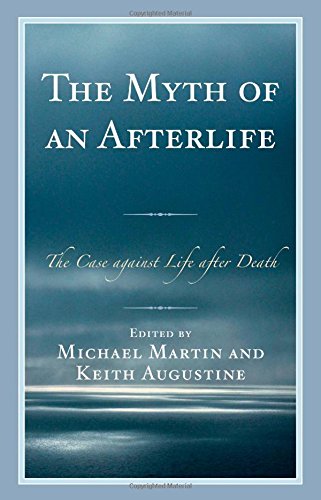
The Myth of the Afterlife
This just came out. I wrote the lead chapter in it. Buy it at Amazon:
The Myth of the Afterlife
Monday, March 30, 2015
The F Word Lecture
Wednesday, March 18, 2015
The F Word
The F Word.
I'm speaking to a secular humanists group tonight in Manteca at the Manteca Public Library at 7:00. I'll be talking about the problems with believing by faith.
My presentation is here.
Friday, April 18, 2014
Wednesday, April 9, 2014
Ad hominem: Your Sins Keep You from Seeing God
I'm recycling this post from 2007. This guy put his finger on something:
A group of philosophers sympathetic with the Christian take on things have constructed a complicated and technical account of God beliefs and their source in human cognition known as reformed epistemology. On the view, espoused by Plantinga and Wolterstorff and widely cited and supported in recent years, humans are endowed by God with an innate faculty for sensing God under the right circumstances. This sensus divinitatus is one aspect of a properly functioning cognitive and belief forming system in humans. When it is not corrupted by the invasive noetic effects of sin, this faculty produces a belief in God that is immediate, direct, and non-inferentially justified. That is, a belief in God is properly basic according to the reformed epistemologists. It is not supported by any other independent or more fundamental facts. It cannot be justified on the basis of other beliefs. Rather, it’s axiomatic like the law of non-contradiction or the identity of indiscernibles. The sensus divinitatus will manifest itself in a variety of ways—when you see a sweeping vista of majestic mountaintops, or when your first child is born, or upon pondering the vastness and magnificence of the universe in the night sky.
Misinterpreting these feelings of the divine as indicators of a non-Christian God as a Hindu might, or suppressing them and denying that God is manifest in experience are all the by-products of a sinful nature. Doubters, skeptics, and deniers—anyone who doesn’t buy into the Reformed Epistemology picture—have all had their God given God detectors corrupted, co-opted, and distorted by sin. What they need, of course, is the salvation of Jesus to cleanse them of their immorality and to restore the proper function of their belief faculties. Then they will see that they were not right with God before. And then they will have properly basis religious experience of God. So the view has a the tidy way to deal with criticisms and legitimate objections. No objection to the whole scheme can have any merit because it arises from doubt, which is really just wickedness. If you had some experiences that seemed to have profound religious significance, like any normal person you would wonder about alternative explanations. Could this just be a weird artifact of my neurology? I wonder what natural explanation there could be for this strange disassociation? Maybe I ate something bad? The full-blown theistic supernatural explanation is one possibility. But according to Reformed Epistemology any suspicion that you have that it might have been something natural is really the result of your innately evil nature and the taint that sin has placed on your ability to think straight. They position undercuts any objections with an ad hominem attack on the moral character of the questioner.
The whole scheme is also clever (and insidious) for inventing a notion of private evidence that shouldn’t be held up for any public scrutiny by someone who has doubts. Once you’re in the special club, you’re provided with “self-authenticating witness of the holy spirit” that gives you perfect, unassailable assurance about your God doctrine no matter what empirical questions or doubts may arise. Ordinarily, evidence is something that is sharable and public. The prosecuting attorney displays the gun that was the murder weapon for everyone in the court, the dentist looks at X-rays, and your mechanic points to the leaking oil around a gasket as evidence that there is a problem. But this special God feeling isn’t like that; it’s just a feeling you have that something’s got to be true, so it can’t be shared with anyone else. Plantinga and some of the people in this camp suggest that the earnest Christian in this situation ought to consider alternative explanations for their experience. Many properly basic beliefs, including the God one presumably, are defeasible. If you have the experiences, and if your conviction that that’s really God your feeling persists after you have scrutinized the belief and reflected on what might be causing it, then you will have a warranted, and true belief that there is a God.
Needless to say, the notion of private evidence here is deeply problematic. Imagine an IRS agent telling you that she’s got self-authenticating, private evidence that you can’t see that you owe the government an extra $20,000 tax dollars. Imagine a doctor telling you that she’s got self-authenticating evidence that you’ve got cancer, but the evidence can’t be grasped by anyone who doesn’t already believe it. Or imagine your husband telling you that he’s got special, private, self-authenticating evidence that you’ve been cheating on him. Then suppose furthermore that they assure you that their conclusion is right because they have thought long and hard about it and considered other possibilities. Evidence that's private isn't really evidence at all and a mere feeling that something just must be true, no matter how strong or persistent, is never enough to give it warrant.
Here’s a model of human rationality and religious belief that is much more accurate. Humans are endowed by evolution with a remarkably effective set of problem solving skills that can be group loosely under the general heading “reason.” In the right circumstances, our reason allows us to devise complicated and elegant solutions to challenges, make accurate inferences and predictions, and arrive at many well-justified and true beliefs. We manage to cure diseases like polio and land people on the moon. But our cognitive systems are kludgey and imperfect. They’re strapped together with disparate functions and tools that were available at various stages in a long, convoluted evolutionary history. Sometimes they don’t track the truth at all, like when you have an attack of claustrophobia, or you can’t bear to even look at a dish that once made you sick when you were a child. Sometimes our cognitive faculties overreact, mislead, underestimate, or misjudge.
Our fancier faculties of reason are also often overwhelmed by a variety of emotional, psychological, and biological forces that erode our ability to reason well and see the truth. One legacy of our evolutionary history appears to be a powerful disposition towards religious belief, experiences, and feelings. Daniel Dennett and Stephen Pinker have recently argued that natural selection may have endowed us with a sort of mind-attribution module. Construing other organisms behavior as the product of the planning and goals within their minds, whether they really have them or not, would be an effective mechanism for anticipating and projecting the behaviors of potential predators and prey. But we’re just built to take it too far and endow everything with a mind—the wind, the ocean, the starry sky, and the world itself.
In an earlier post, I called it the Urge—a powerful and seductive need we have to be religious. Completely aside from the factual question of God, it is obvious to anyone who observes humans and their religious activities that we desperately want there to be a God and we will adopt the most contorted gymnastics of reasoning to rationalize the belief. Even if there are some theists with good reasons, there are far more with sloppy, fallacy ridden, biased grounds that they offer for their beliefs. And in lots of these cases, it’s not really the poor reasoning that is offered in defense of someone’s God belief that led them to believe at all. More often it is the case that people have the belief first as a result of the Urge’s infiltration of their consciousness, and then they back fill that conclusion with some superficial reasons. So the Urge is really the dark side of your nature that threatens to corrupt your more noble aspects. It’s the alluring, siren call of religion itself, not sin, that will co-opt reason’s ability to see the world in an accurate light.
Staying on the straight and narrow will require resisting the temptation of religion’s easy, emotionally satisfying answers to the biggest metaphysical questions. Living up to your potential to reason clearly and evaluate the evidence objectively demands that you be constantly vigilant against seduction of religion’s false comforts.

